

On World Obesity Day, WONDERLAB Releases the Targeted Microbiota Weight Management White Paper
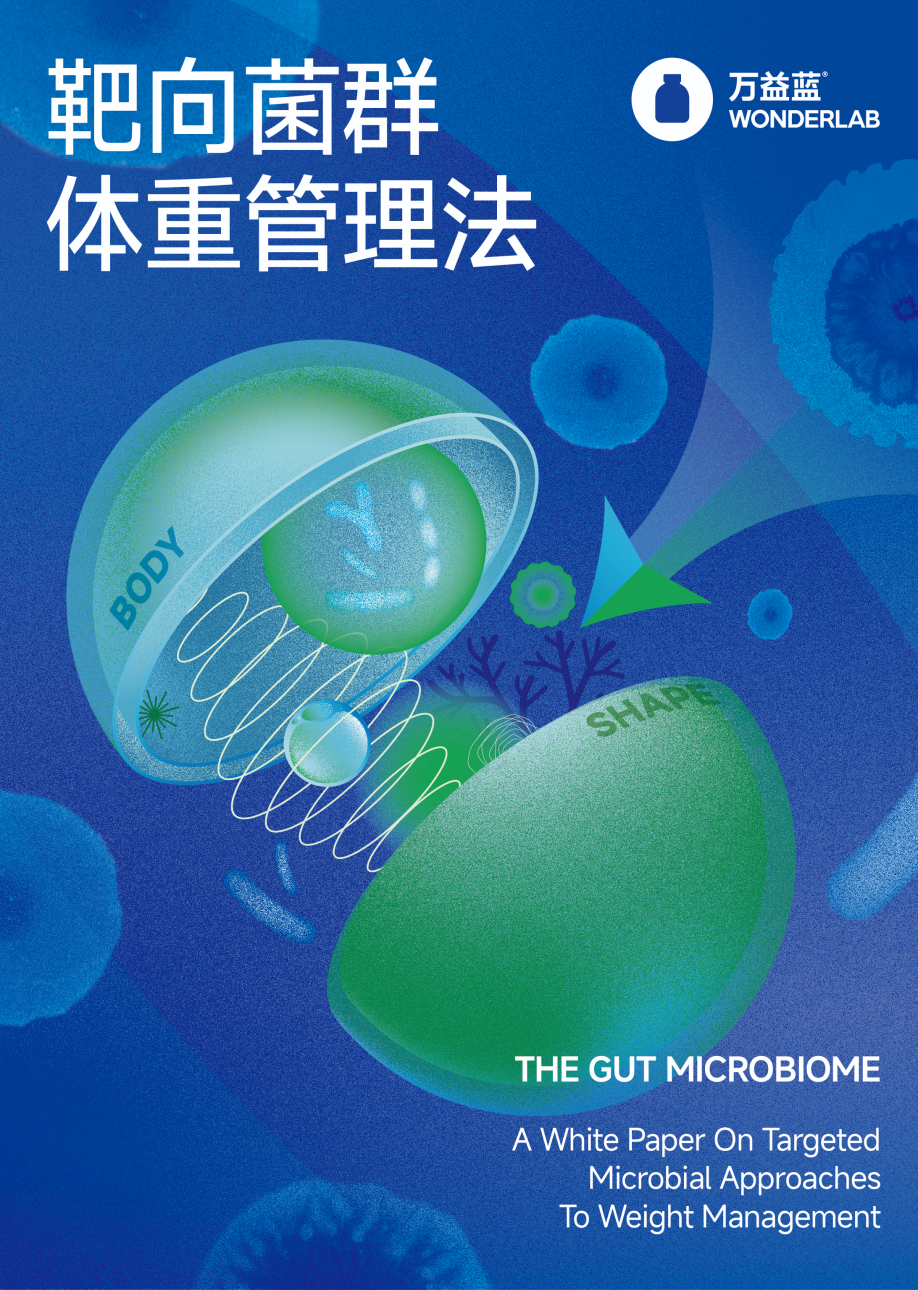
SHENZHEN, China, July 08, 2026 (GLOBE NEWSWIRE) -- WONDERLAB, a leading Chinese probiotics company ranked No.1 in probiotic sales in China,¹ has published the Targeted Microbiota Weight Management White Paper, a strain-specific framework for microbiome-based weight management. First presented on World Obesity Day (March 4, 2026) together with China Quality Report, the white paper was compiled with guidance from a panel of experts in nutrition and microbiome science, including Prof. Guo Hongwei, a standing council member of the Chinese Nutrition Society, and Prof. Liu Shuangjiang, who chairs the Gut Microbiota Branch of the Chinese Biophysical Society. It reviews the molecular mechanisms through which the gut microbiome participates in body-weight regulation and sets out a framework for precision weight management, serving as a professional reference for nutritionists, clinicians, and researchers, and as a science-based guide for the general public.
The Obesity Challenge and the Limits of Conventional Approaches
Overweight and obesity have become a global public-health concern. According to the World Health Organization, in 2022 about 16% of adults worldwide were living with obesity, while obesity among children and adolescents rose from 2% to 8% over recent decades. In China, adult overweight and obesity had reached roughly 50% by 2020. Research links obesity not only to body shape but to a range of chronic non-communicable diseases: an elevated BMI is associated with higher risks of conditions including type 2 diabetes, cardiovascular disease, and certain cancers.
Conventional weight-management methods each face limitations. Diet and exercise often suffer from low adherence and high rebound rates; weight-loss medications may carry side effects; and surgical options are invasive and carry procedural risks. The same program can also produce very different results across individuals. The traditional “calories in, calories out” model is increasingly seen as insufficient for precise, sustainable weight management, pointing to the need for new approaches.
The Gut Microbiome as a Central Target in Weight Regulation
The white paper takes the gut microbiome as its central entry point, examining the biological links between gut bacteria and body-weight regulation. The trillions of microorganisms in the human gut carry more than 100 times as many genes as the human genome itself, and are sometimes described as the body’s “second genome.” Beyond aiding digestion and absorption, these microbes play important roles in energy metabolism, fat storage, immune regulation, and inflammation.
Because obesity is heterogeneous, the white paper draws on the four obesity phenotypes described by the Mayo Clinic — Hungry Brain, Emotional Hunger, Hungry Gut, and Slow Burn — noting that each phenotype is associated with distinct patterns of gut-microbiome dysfunction. This phenotype framework provides a basis for a more targeted approach to weight management.
A Targeted, Multi-Dimensional Framework
Building on four core mechanisms through which gut bacteria influence weight — reinforcing the gut barrier, modulating bile acids, producing short-chain fatty acids (SCFAs), and regulating appetite — WONDERLAB, with guidance from nutrition and microbiome specialists, put forward the Targeted Microbiota Weight Management approach.
As the central idea of the white paper, the approach combines three intervention pillars: reinforcing the gut barrier and easing chronic inflammation, modulating bile-acid metabolism, and promoting SCFA production to support satiety. Working together, these pillars are designed to support a sustainable energy balance. The approach also follows a staged, step-by-step timeline intended to help make the effects more durable.
For each phenotype, the white paper outlines a tailored intervention. All phenotypes begin with a one-to-two-week foundational phase centered on reinforcing the gut barrier, using a combination of specific strains — Lacticaseibacillus rhamnosus GOLDGUT-M520, Limosilactobacillus reuteri GOLDGUT-LR99, and Bifidobacterium animalis subsp. lactis BB-12 — to establish a stable microbiome base. This is followed by targeted interventions matched to the metabolic features of each phenotype, each with its own focus and corresponding strain combination.
The white paper places particular emphasis on strain specificity. It notes that even different strains of the same species can differ meaningfully in function, so probiotic use in weight management should be defined at the strain level. This principle is central to the Targeted Microbiota Weight Management approach.
By bringing a microbiome perspective and an actionable, precision framework to weight management, the white paper reflects WONDERLAB’s broader focus on evidence-based research and science communication. The company said it will continue to build on its microbiome R&D and ongoing public-health education, contributing a science-based approach to the global conversation on obesity.
About WONDERLAB
WONDERLAB is an R&D-driven biotech company in the microbiome field. Since its founding in 2019, it has invested over RMB 100 million in research and built a full-chain R&D system spanning strain screening, mechanism research, and clinical evaluation, anchored by its proprietary GOLDGUT® strain portfolio. WONDERLAB has established joint laboratories with institutions including the State Key Laboratory at Shandong University, Hainan University, and the China National Research Institute of Food and Fermentation Industries, and carries out clinical studies with leading Chinese hospitals such as Peking Union Medical College Hospital, Peking University Third Hospital, and the First Affiliated Hospital of Sun Yat-sen University, forming an evidence-based approach to product development. WONDERLAB has been recognized by Frost & Sullivan as China’s No.1 probiotics brand by sales for three consecutive years (January 2021–December 2023),¹ with more than 700 million bottles sold across all channels as of August 2025.² For more information, visit https://www.wonderlab.top/en/.
¹ Ranked No.1 in probiotic sales in China — source: Frost & Sullivan; cumulative sales Jan 2021–Dec 2023; Chinese mainland.
² Over 700 million bottles sold across all channels as of Aug 2025.
Disclaimer: Probiotics and nutritional supplements are food products and are not intended to diagnose, treat, cure, or prevent any disease. The mechanisms described in the white paper reflect scientific research and do not constitute product efficacy claims.
Media Contact
Jason Lee
WONDERLAB
Email: WonderLab.PR@wonderlab.top
Address: 22F, Tower D, China Resources Land Building, No. 91 Kefa Road, Nanshan District, Shenzhen, Guangdong, China
Website: https://www.wonderlab.top/en/
A photo accompanying this announcement is available at https://www.globenewswire.com/NewsRoom/AttachmentNg/9b67f9e5-0bfc-4a0d-8a0a-45b02b1fef44

WONDERLAB
WONDERLAB
Legal Disclaimer:
EIN Presswire provides this news content "as is" without warranty of any kind. We do not accept any responsibility or liability for the accuracy, content, images, videos, licenses, completeness, legality, or reliability of the information contained in this article. If you have any complaints or copyright issues related to this article, kindly contact the author above.
